Showing posts with label Banks. Show all posts
Showing posts with label Banks. Show all posts
Monday, November 2, 2009


Tuesday, March 18, 2008
The collapse of Bear Stearns and the UK economy
Source: Money Week
"In fact, the pound even fell against the dollar, unlike almost every other major currency. The horrible reality is that the markets think that theUK is in almost as much trouble as the US
Read More »
"In fact, the pound even fell against the dollar, unlike almost every other major currency. The horrible reality is that the markets think that the
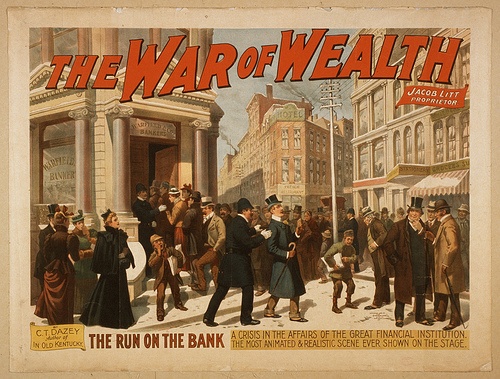
"The Dow Jones actually managed to end higher yesterday, up 20-odd points by the close, as traders gradually calmed down after no other banks went to the wall. Fear had centred on Lehman Brothers, which has a similar business model to Bear Stearns, but it seems that Wall Street rallied round the group to avoid a run on the bank igniting – for now at least.
Of course, it’s saying something when you can argue that Lehman investors might have been relieved that the company’s stock ‘only’ closed down by around 20%. Other financials such as Man Group spin-off MF Global dived by more than 50%, on little more than fear and rumour. But the real carnage was happening this side of the Atlantic, here in the
Which
British banks took a pounding once again, with HBOS,
That still compares very favourably to Northern Rock, which was on 345%. But HBOS also has £7.1bn of exposure to Alt-A mortgages in the
But HBOS is far from being the only bank that investors are worried about. It wasn’t thought to be among the desperate lenders clamouring for money from the Bank of England yesterday, for one thing. The Bank of England auctioned off £5bn of short-term loans at 5.25% yesterday, but banks requested almost five times that amount, £23.6bn. The move came as the inter-bank lending rate spiked up to 5.59%, in the largest rise in three months.
Incidentally, if you’re worried that the bank you hold an account with could be at risk, you can read James Ferguson’s article on where the safest places to park your savings are here: How to spot the riskiest banks...."
Friday, March 14, 2008
Despite the Federal Reserve's efforts Wall Street fears a big US bank is in trouble
Source: Times Online
Read More »
"Global stock markets may have cheered the US Federal Reserve yesterday, but on Wall Street the Fed's unprecedented move to pump $280 billion (£140 billion) into global markets was seen as a sure sign that at least one financial institution was struggling to survive.
The name on most people's lips was Bear Stearns. Although the Fed billed the co-ordinated rescue as a way of improving liquidity across financial markets, economists and analysts said that the decision appeared to be driven by an urgent need to stave off the collapse of an American bank.
“The only reason the Fed would do this is if they knew one or more of their primary dealers actually wasn't flush with cash and needed funds in a hurry,” Simon Maughan, an analyst with MF Global in London, said..."
Subscribe to:
Posts (Atom)